

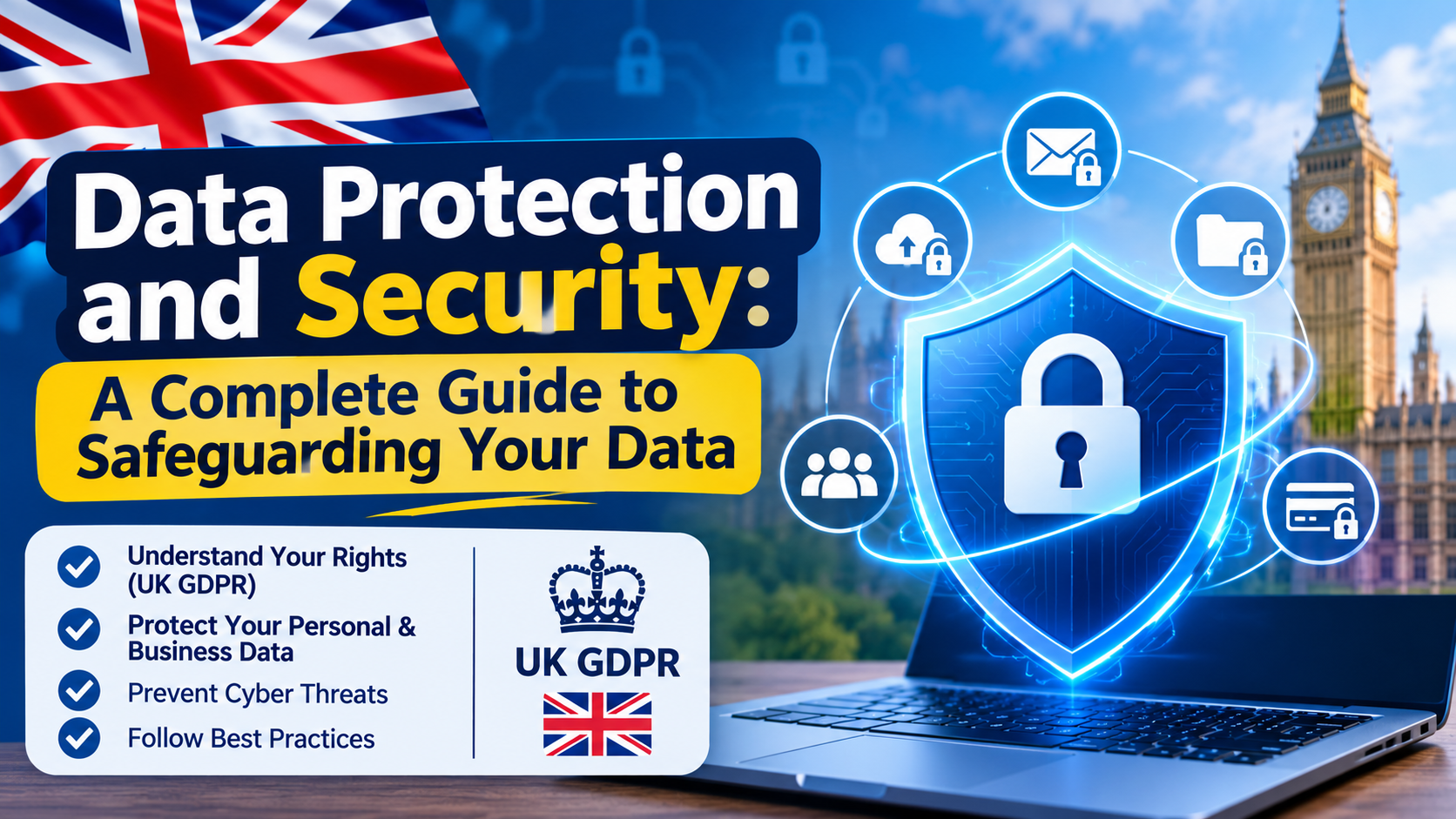
In today’s digital world, businesses and individuals rely heavily on technology to store, access and share information. From customer records and financial details to employee information and business documents, data plays an essential role in everyday operations. However, increasing cyber threats, data breaches and online fraud make protecting this information more important than ever.
Data protection and security help organisations safeguard valuable information, maintain customer trust and reduce the risks associated with unauthorised access. In the UK, businesses must also understand their responsibilities under the UK General Data Protection Regulation (UK GDPR) and the Data Protection Act 2018.
In this guide, we explore why data protection and security matter, common risks and practical ways to safeguard your information.
What Are Data Protection and Security?
Data protection refers to the policies and practices used to ensure personal and business information is collected, processed, stored and shared responsibly.
Data security focuses on protecting information against unauthorised access, cyberattacks, accidental loss, theft or damage through technical and organisational measures.
Although closely connected, both have different purposes. Data protection focuses on individuals’ information rights and responsible data handling, while data security focuses on keeping information safe.
Why Are Data Protection and Security Important?
Strong data protection and security practices are essential for organisations of every size.
Here are some important reasons:
- Prevent data breaches: Security measures help reduce the risk of confidential information being accessed or exposed without permission.
- Build customer trust: Customers are more confident when businesses demonstrate responsible data handling.
- Protect business operations: Secure systems help prevent disruptions caused by cyberattacks, ransomware and data loss.
- Meet legal responsibilities: UK businesses must follow applicable data protection requirements when processing personal information.
- Protect business reputation: Effective security practices help minimise reputational damage and financial consequences.
Common Data Security Threats Businesses Should Know
Organisations face different types of threats that can compromise their information.
1. Phishing attacks
Cybercriminals send fraudulent emails or messages to trick employees into sharing passwords, financial information or confidential business details.
2. Ransomware and malware
Malicious software can disrupt systems, encrypt important files or expose sensitive information.
3. Weak passwords
Poor password practices and reused login credentials can make business accounts easier to compromise.
4. Insider threats
Employees or contractors may accidentally or deliberately expose confidential information through inappropriate access or unsafe data handling.
5. Unauthorised access
Insufficient access controls can allow individuals to view or modify information they do not need for their work.
Best Practices for Improving Data Protection and Security
Businesses can strengthen their security practices by following these important steps:
- Use strong passwords and multi-factor authentication: Add additional verification to important accounts and systems.
- Encrypt sensitive information: Protect data when it is stored and transmitted, where appropriate.
- Control access permissions: Give employees access only to the information required for their responsibilities.
- Update software regularly: Apply security updates to reduce exposure to known vulnerabilities.
- Back up important data: Maintain secure backups and regularly test recovery procedures.
- Train employees: Educate staff about phishing, suspicious links and responsible information handling.
- Monitor security systems: Review unusual account activity and investigate potential security incidents.
- Create a data breach response plan: Establish clear procedures for identifying, managing and reporting breaches.
UK Data Protection Laws and Regulations
UK organisations that handle personal information must understand the relevant legal requirements.
The UK GDPR establishes important principles for processing personal data, including lawfulness, fairness, transparency, purpose limitation, data minimisation, accuracy, storage limitation, security and accountability.
The Data Protection Act 2018 provides the wider UK legislative framework for data protection.
The Information Commissioner’s Office (ICO) is responsible for regulating data protection and information rights in the UK.
Businesses should assess their data processing activities and implement appropriate technical and organisational security measures based on the risks involved.
Conclusion
Data protection and security are essential for protecting personal information, maintaining business continuity and building customer confidence. As cyber threats continue to evolve, organisations must take a proactive approach to securing their information.
By implementing strong security controls, training employees, reviewing data handling practices and understanding UK data protection requirements, businesses can reduce risks and create a safer digital environment.
Ready to strengthen your data protection and security practices? Contact our team today to discover how we can help you protect valuable information and improve your approach to data security.
Frequently Asked Questions (FAQs)
1. What is data protection and security?
Data protection involves responsible handling of personal information, while data security focuses on protecting information against unauthorised access, loss, theft and damage.
2. Why is data protection important for businesses?
It helps businesses protect confidential information, maintain customer trust, reduce security risks and meet applicable legal responsibilities.
3. What are the common data security threats?
Common threats include phishing, ransomware, malware, weak passwords, insider threats and unauthorised access.
4. How can businesses improve data security?
Businesses can use encryption, multi-factor authentication, secure backups, access controls, regular software updates and employee security training.
5. Which UK laws cover data protection?
The main frameworks include the UK GDPR and the Data Protection Act 2018. PECR also applies to certain electronic communications, marketing and cookies.
6. What should a business do after a data breach?
It should investigate and contain the incident, assess the risks to individuals and determine its reporting obligations. Reportable personal data breaches must be notified to the ICO without undue delay and, where feasible, within 72 hours of becoming aware.