

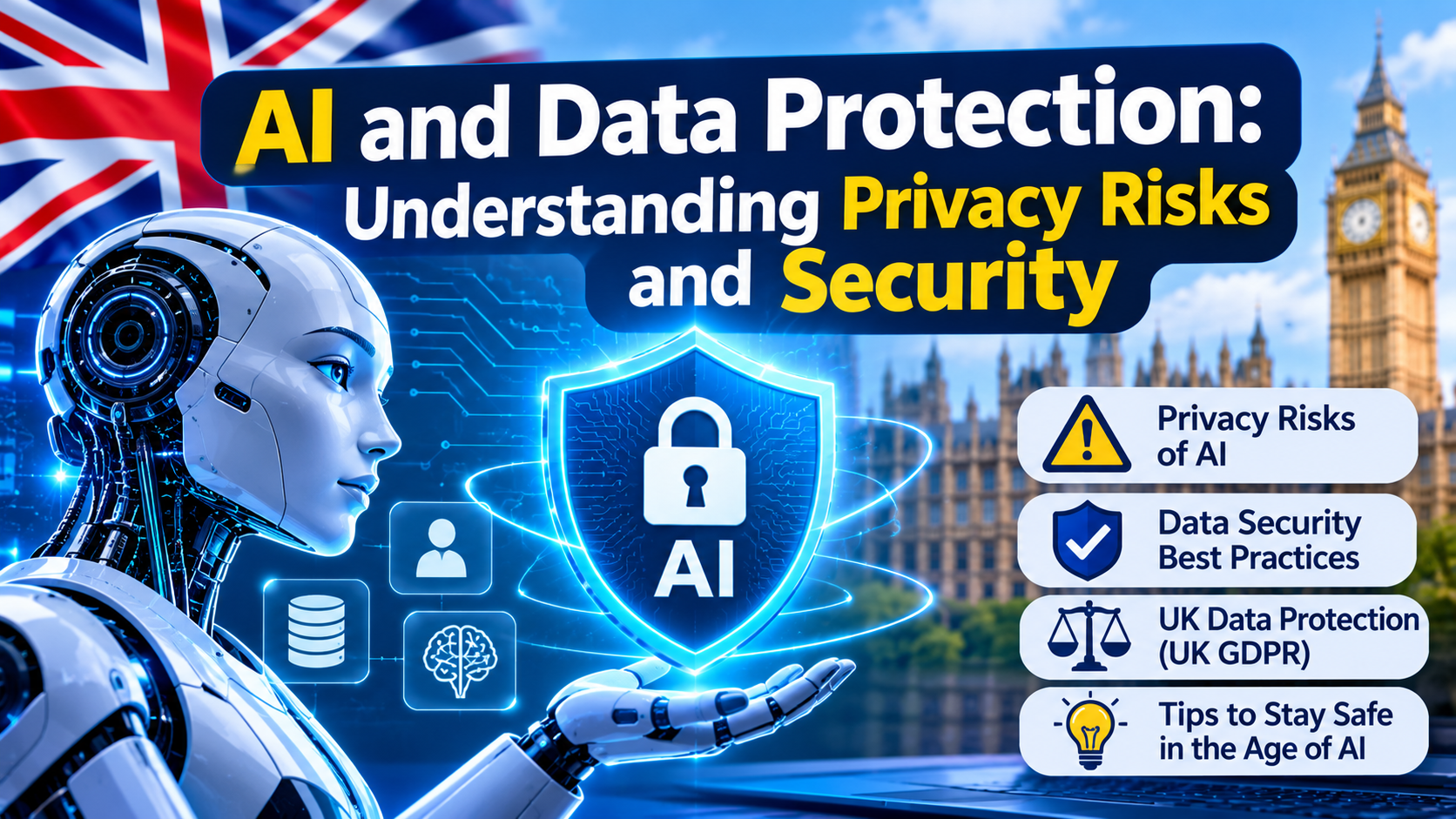
Artificial Intelligence (AI) is transforming how businesses operate, manage information and interact with customers. From automated customer support and data analysis to content generation and decision-making, AI technologies are becoming part of everyday business activities.
However, as organisations increasingly rely on AI tools, protecting personal and confidential information has become a major concern. AI data protection systems may process large amounts of data, creating potential privacy risks, security challenges and questions about how information is collected and used.
Understanding AI and data protection is essential for businesses that want to benefit from artificial intelligence while respecting individual privacy and meeting their legal responsibilities in the UK.
In this guide, we explore the relationship between AI and data protection, common privacy risks and practical ways to use AI responsibly.
What Is AI and Data Protection?
AI and data protection refer to the practices and measures used to safeguard personal information when developing, training, deploying or using artificial intelligence systems.
AI tools may process different types of information, including customer details, employee records, financial information, images and online activity.
When this information relates to an identified or identifiable living individual, it may qualify as personal data under the UK GDPR.
Businesses must therefore consider how AI systems collect, use, store and share personal information.
Why Is Data Protection Important in AI?
AI technologies can improve efficiency, automate repetitive tasks and help businesses make informed decisions. However, using these systems without appropriate privacy safeguards can create significant risks.
Here is why AI and data protection should go together:
- Protect personal information: Prevent sensitive information from being exposed or misused.
- Maintain customer trust: Demonstrate transparency about how AI systems use personal data.
- Reduce privacy risks: Identify potential issues before introducing AI technologies.
- Support legal compliance: Ensure AI-related data processing meets applicable UK data protection requirements.
- Promote responsible AI: Encourage fair, transparent and accountable use of artificial intelligence.
Common AI Data Protection and Privacy Risks
Although AI offers many benefits, organisations should understand the potential risks.
1. Unauthorised data sharing
Employees may enter customer information, confidential documents or business records into AI platforms without understanding how that information is processed.
2. Data breaches
AI platforms and the systems connected to them may become targets for cyberattacks, potentially exposing personal or confidential information.
3. Lack of transparency
Individuals may not understand when AI is being used or how their personal information influences automated processes and decisions.
4. Biased AI decisions
AI systems can produce unfair or discriminatory outcomes if their training data or design contains biases.
5. Excessive data collection
Some AI applications may collect or process more personal information than necessary for their intended purpose.
Best Practices for Protecting Data When Using AI
Businesses should establish clear safeguards before adopting AI technologies.
- Understand what data AI systems process: Identify the types of personal and confidential information involved.
- Avoid sharing unnecessary sensitive information: Do not enter personal or confidential business data into AI tools unless the platform and processing arrangements have been appropriately assessed and authorised.
- Review AI providers: Understand how third-party AI services store, process and protect information.
- Implement access controls: Restrict AI system access to authorised employees.
- Maintain transparency: Explain relevant AI-related data processing to individuals through appropriate privacy information.
- Assess privacy risks: Carry out a Data Protection Impact Assessment (DPIA) when processing is likely to result in a high risk to individuals.
- Monitor AI systems: Regularly review their performance, security and impact on individuals.
- Train employees: Establish guidelines for safe, responsible and appropriate AI use.
AI and UK Data Protection Laws
In the UK, organisations using AI to process personal information must consider their obligations under the UK GDPR and the Data Protection Act 2018.
Important data protection requirements include:
- Lawfulness and transparency: Organisations must have an appropriate lawful basis for processing personal data and provide relevant privacy information.
- Purpose limitation: Personal information should be used for specified and legitimate purposes.
- Data minimisation: Only collect and process information that is necessary.
- Accuracy: Take reasonable steps to ensure personal data is accurate.
- Security: Protect personal information through appropriate technical and organisational measures.
- Accountability: Be able to demonstrate compliance with relevant data protection requirements.
The ICO provides specific guidance on artificial intelligence and data protection to help organisations understand their responsibilities.
How Can Businesses Use AI Responsibly?
Responsible AI adoption starts with understanding the technology and its potential impact on individuals.
Businesses should assess AI tools before introducing them, establish clear internal policies and involve relevant privacy and security professionals.
They should also review third-party providers, monitor how personal information is processed and ensure employees understand the risks associated with AI applications.
By combining innovation with effective privacy safeguards, organisations can benefit from AI while maintaining responsible data practices.
Conclusion
AI is creating new opportunities for businesses, but it also introduces important data protection and privacy challenges. Organisations must understand how AI systems process personal information and take appropriate steps to protect it.
By following UK data protection requirements, assessing privacy risks, choosing trustworthy AI providers and educating employees, businesses can use artificial intelligence more responsibly.
Want to use AI while keeping your data protected? Get in touch with our team today to explore how you can strengthen your data protection practices and support safer AI adoption.
Frequently Asked Questions (FAQs)
1. What is AI and data protection?
AI and data protection involve safeguarding personal information when artificial intelligence systems collect, process, analyse or use data.
2. Why is data protection important when using AI?
It helps prevent personal information from being exposed, misused or processed unfairly while supporting privacy, security and legal compliance.
3. What are the biggest AI data privacy risks?
Common risks include unauthorised data sharing, data breaches, excessive data collection, biased decisions and a lack of transparency.
4. Is AI covered by UK GDPR?
Yes. When an AI system processes personal data within the scope of UK GDPR, organisations must comply with applicable data protection requirements.
5. Can businesses enter personal information into AI tools?
Businesses should first assess the AI tool, its data processing arrangements, security and legal basis for processing. They should avoid entering unnecessary personal or confidential information.
6. What is a Data Protection Impact Assessment (DPIA) in AI?
A DPIA is a process for identifying and minimising privacy risks associated with data processing. It is legally required before processing that is likely to result in a high risk to individuals.
7. How can businesses make AI safer?
Businesses can improve AI safety by using appropriate access controls, reviewing providers, minimising personal data, training employees and regularly assessing privacy and security risks.